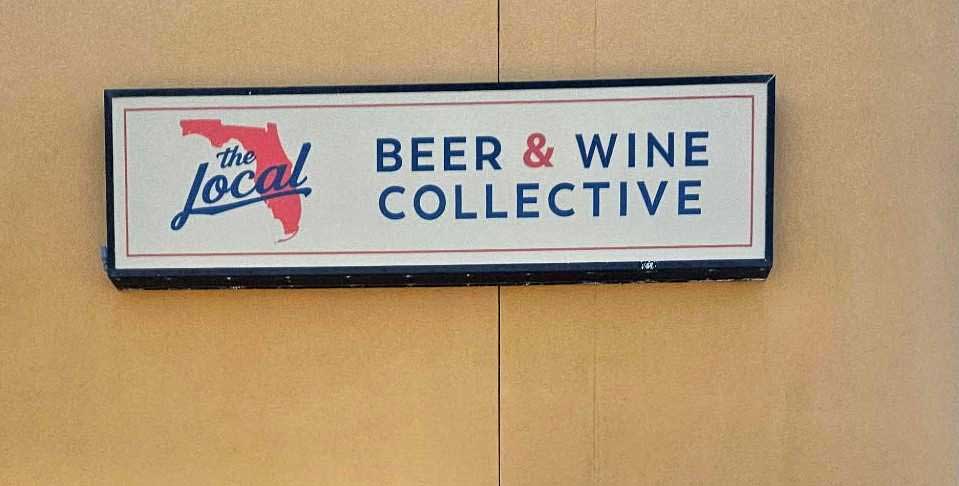

A lot of businesses put real thought into their exterior signage. They invest in a well-designed monument sign or channel letters out front, get the colors right, make sure it is visible from the road. Then a customer walks through the door and finds something that looks like a completely different company on the inside.
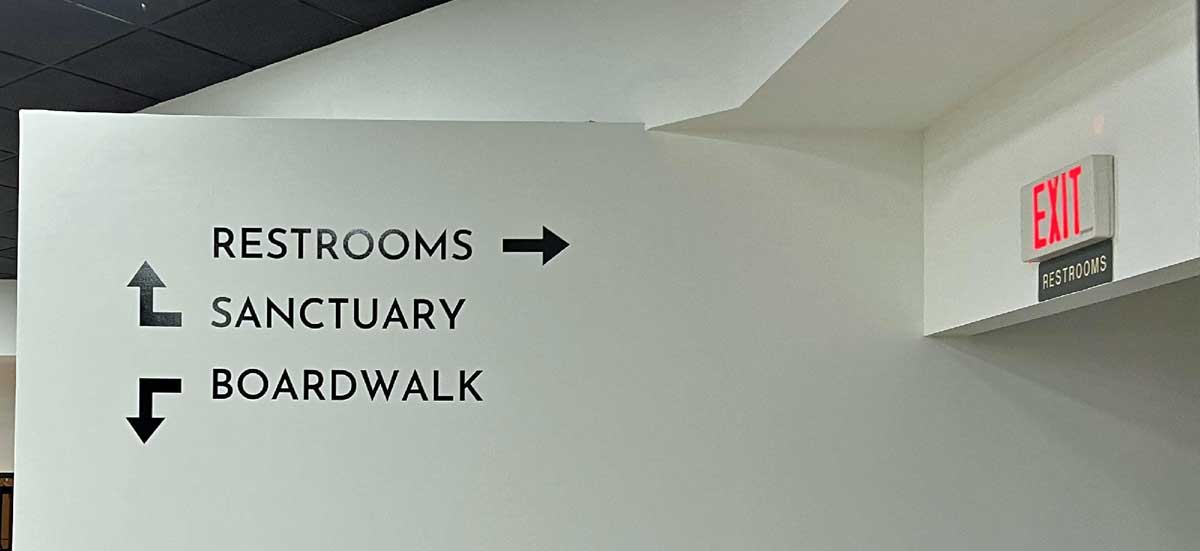
No branded reception area. A lobby sign printed on standard paper and taped to the wall. Wayfinding that amounts to hand-lettered sticky notes pointing toward the restrooms. Conference rooms with generic nameplates from an office supply store.
Interior signage is the most overlooked part of a business’s physical brand, and the gap between what companies invest in outside versus inside is striking. What most people do not realize is that the work your exterior sign does to set an expectation gets confirmed or contradicted the moment someone steps inside. That second impression matters just as much as the first one.

Why Interior Signage Gets Skipped
Part of it is visibility. Exterior signage is public-facing and feels urgent. Interior signage only affects people who have already walked through the door, so it tends to get deprioritized behind everything else competing for a business owner’s attention and budget.
Part of it is also that interior signage tends to be added incrementally rather than designed as a system. A lobby sign gets ordered when the space opens. A directory gets added when the building grows. Wayfinding gets pieced together as complaints come in. Each decision gets made in isolation, and over time the interior environment becomes a collection of mismatched elements that nobody planned together.
The result is a brand experience that is inconsistent at best. At worst, it signals to customers that the business stops caring about details once they are inside.
What Interior Signage Actually Includes
When most people hear the term interior signage, they think of a lobby sign. That is where the category starts, not where it ends. A complete interior signage system typically covers:
- Lobby and reception signs that anchor the brand identity at the point of entry
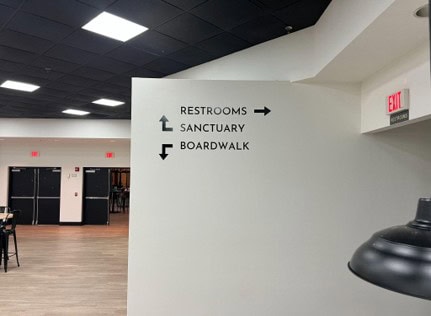
- Wayfinding and directional signage that guides visitors through the space without confusion
- Suite and office identification signs for professional environments with multiple tenants or departments
- Conference room and meeting space signage
- ADA-compliant signage including tactile and Braille elements where required by law
- Branded wall graphics, murals, and dimensional lettering that reinforce culture and identity throughout the space
- Safety and compliance signage integrated with the overall design rather than bolted on as an afterthought
Not every business needs all of these. But most businesses need more of them than they currently have, and almost all of them would benefit from having what they do have designed as a cohesive system rather than a series of one-off decisions.
The Brand Consistency Problem
Here is where this gets expensive in ways that are hard to measure. When a customer’s experience of your brand is inconsistent between the outside and inside of your building, it introduces doubt. Not dramatic doubt. Subtle doubt. The kind that makes someone slightly less confident in the purchase they are about to make, or slightly less likely to refer to a friend.
Brand consistency is not just a marketing concern. It is a trust mechanism. People feel more comfortable in environments where everything lines up. The fonts match. The colors are right. The quality of materials is consistent. Nothing looks like it was purchased from a different company than the one they came to see.
Businesses that have invested in exterior signage but neglected the interior are essentially winning the audition and then walking out in a different costume. The mismatch is jarring even when customers cannot articulate exactly what feels off.
ADA Compliance Is Not Optional and Often Gets Missed
This one deserves its own section because it catches businesses off guard and the consequences are real. The Americans with Disabilities Act sets specific requirements for interior signage in commercial spaces, including tactile lettering, Braille, placement height, contrast ratios, and non-glare finishes. These requirements apply to permanent room identification signs, directional signage, and signage identifying accessibility features.
Many businesses, particularly those that pieced their interior signage together over time, are not fully compliant without knowing it. This is not a theoretical risk. ADA signage complaints and lawsuits targeting small and mid-size businesses have increased steadily, and the cost of retrofitting non-compliant signage is almost always higher than getting it right from the start.
Working with a signage partner who understands ADA requirements and builds compliance into the design process from the beginning is the right way to handle this. It is also one of the clearest cases for treating interior signage as a planned system rather than a series of ad hoc purchases.
The ADA National Network provides detailed guidance on signage compliance requirements for commercial spaces: ADA National Network
What Well-Designed Interior Signage Actually Does for Your Business
Beyond consistency and compliance, interior signage does practical work that is easy to undervalue until it is missing.
- It reduces friction for customers and visitors.
Clear wayfinding means people can find what they need without stopping to ask for directions. In a healthcare setting, a law office, a multi-tenant building, or any space where visitors are navigating independently, this matters more than most business owners track. Confusion is a stress response, and stress is not what you want customers feeling when they are trying to decide whether to do business with you. - It reinforces your brand at every touchpoint inside the space.
Every wall, every door, every room identifier is an opportunity to remind someone where they are and what kind of company they are dealing with. Dimensional letters in a reception area, a branded wall graphic in a conference room, a clean and well-lit suite sign in a professional corridor. Each of these is a small signal that adds up to a coherent experience. - It signals that you take your space seriously.
Clients and partners notice the interior environment of the businesses they visit, even when they are not consciously evaluating it. A well-signed, well-branded interior says that the people who run this company pay attention to details. That is a competitive advantage in any industry where perception influences decisions.
Where to Start If Your Interior Signage Is an Afterthought
The most common starting point is a simple audit. Walk through your space as if you have never been there before and note every place where signage is missing, inconsistent, or doing a poor job of representing your brand. Pay particular attention to:
- The first thing someone sees when they walk through the door. Is there a clear, branded anchor point in the reception or lobby area?
- The path from the entrance to wherever customers need to go. Is it intuitive, or do visitors have to guess or ask?
- Any room or space that gets identified by a sign. Do those signs match each other and match the rest of your brand?
- Any printed paper signs still in use. These are almost always temporary solutions that become permanent by default.
From there, the conversation shifts to what a cohesive interior signage system would look like for your specific space, your brand, and your budget. That is a conversation worth having with a signage partner who can look at the full picture rather than selling you individual pieces.
The Inside of Your Building Is Part of Your Brand Too
The businesses that get this right are not necessarily the ones with the biggest budgets. They are the ones that decided to treat their interior environment as an extension of the brand they built on the outside, rather than a separate problem to solve later.
If your interior signage is something you have been meaning to address, or something you have never really thought about at all, the best place to start is an honest look at what a customer experiences from the moment they walk through your door.
Let's Talk About Your Interior Signage
Paradise Signs & Graphics designs and builds complete interior signage systems for businesses across Titusville, Brevard County, and the Space Coast. From lobby signs and wayfinding to ADA-compliant solutions and branded wall graphics, we handle the full scope so your interior matches the standard your exterior already sets.
Reach out today for a complimentary consultation.
Contact Paradise Signs & Graphics Today:
📞 Call: 321-567-5253
📧 Email: wecare@paradisesignsandgraphics.com
🌐 Website: paradisesignsandgraphics.com
📍 Visit Us: 3650 Bobbi Ln, Suite 121-123, Titusville, FL 32780